
Water passively for days after it rains.
Give your thirstiest plants a steady water source — without daily watering guesswork.
- Collect rainwater where your plants already live
- Passively water nearby plants after the rain has passed
- Water less, less often without hoses, timers, or electricity
- Creates a microclimate where beneficial soil life thrives
- Blend naturally into gardens, planters, and outdoor landscapes
— For your thirstiest plants.
Grow more with less watering
RainSpike helps nearby plants access water naturally — so you can spend less time reaching for the watering can.
Less watering. More growing.
How It Works
Collect rainwater for your thirstiest plants
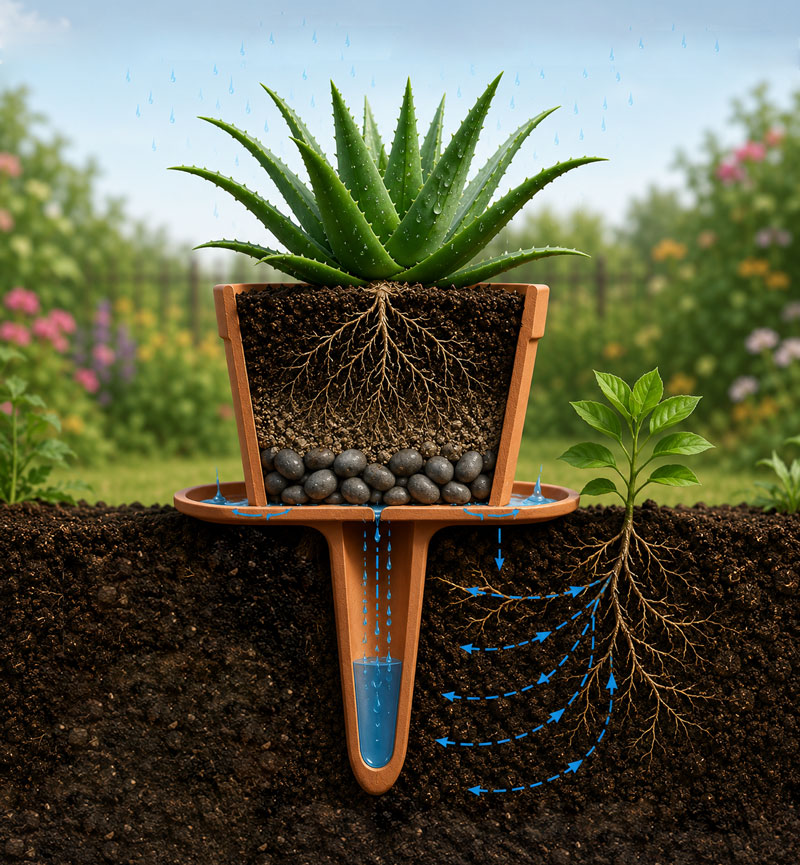
RainSpike catches and funnels rainwater into a porous clay spike that nearby plants can draw from over time.
RainSpike works in three steps:

Rainwater lands on the upper dish
The exposed 10-inch dish sits flat at soil level. Rainwater runs toward the center opening.

Water flows into the underground spike reservoir
The center hole leads into a tapered clay spike buried beneath the surface. The spike stores collected rainwater underground.

Nearby plants access the stored water
The porous clay slowly releases moisture into the surrounding soil. Thirsty plants grow roots toward the underground reservoir.
Passive irrigation, powered by who’da thunk it rain.

Great for plants that dry out quickly

Helpful during hot, sunny stretches

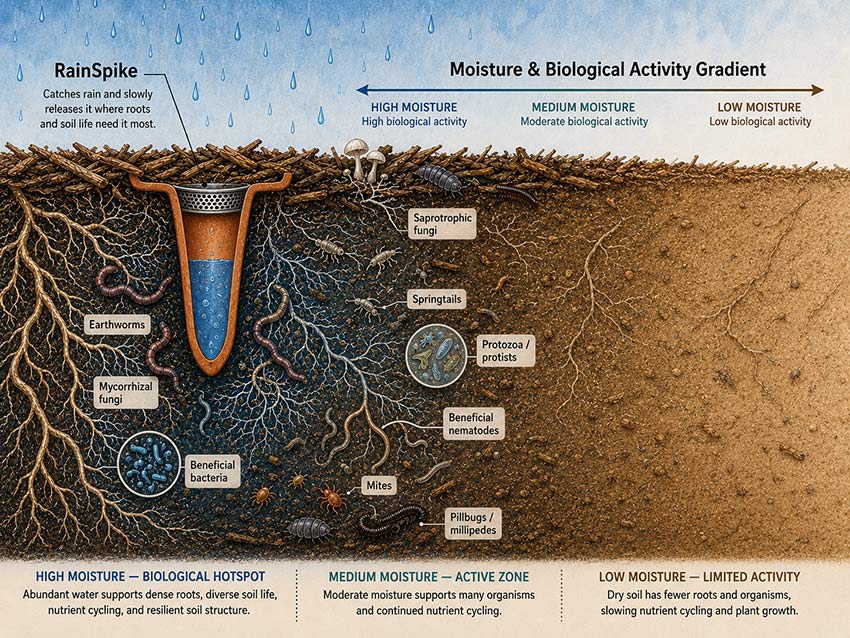
Creates a microclimate where beneficial soil life thrives

Encourages roots to grow toward a steady water source

Keeps water available below the surface longer than ordinary surface watering
Water passively without hoses, timers, or plastic parts
RainSpike gives you a low-tech way to care for plants using rain, clay, and gravity.
- No hoses running through your garden
- No electricity or batteries
- No timers to program
- No plastic product body
- No complicated irrigation setup
- No daily watering guesswork
Set it in the soil. Let rain help. Water less often.
Create a microclimate for earthworms, fungi, and beneficial bacteria
RainSpike creates a localized zone of more consistent moisture where roots, microbes, decomposers, and small soil animals can remain active between rainfall events.






How to install
1. Place or bury the tapered spike underground.
2. Keep the 10-inch dish level with the soil surface.
3. Cover the center hole with a pot, rocks, mulch, or another garden element.
The center hole should be covered in a way that allows rainwater to enter while reducing evaporation.
Recommended covering options
- A clay pot
- A potted plant
- Rocks
- Mulch
- Decorative garden objects
- A small planter that acts as a funnel
Preferred method
Our favorite method is to place a terracotta clay pot over the RainSpike opening.
Most terracotta pots from retailers like Home Depot or Lowe’s are visually similar in color to RainSpike, which helps the setup look natural and cohesive.
The pot can then be filled with:
- Rocks
- Decorative material